
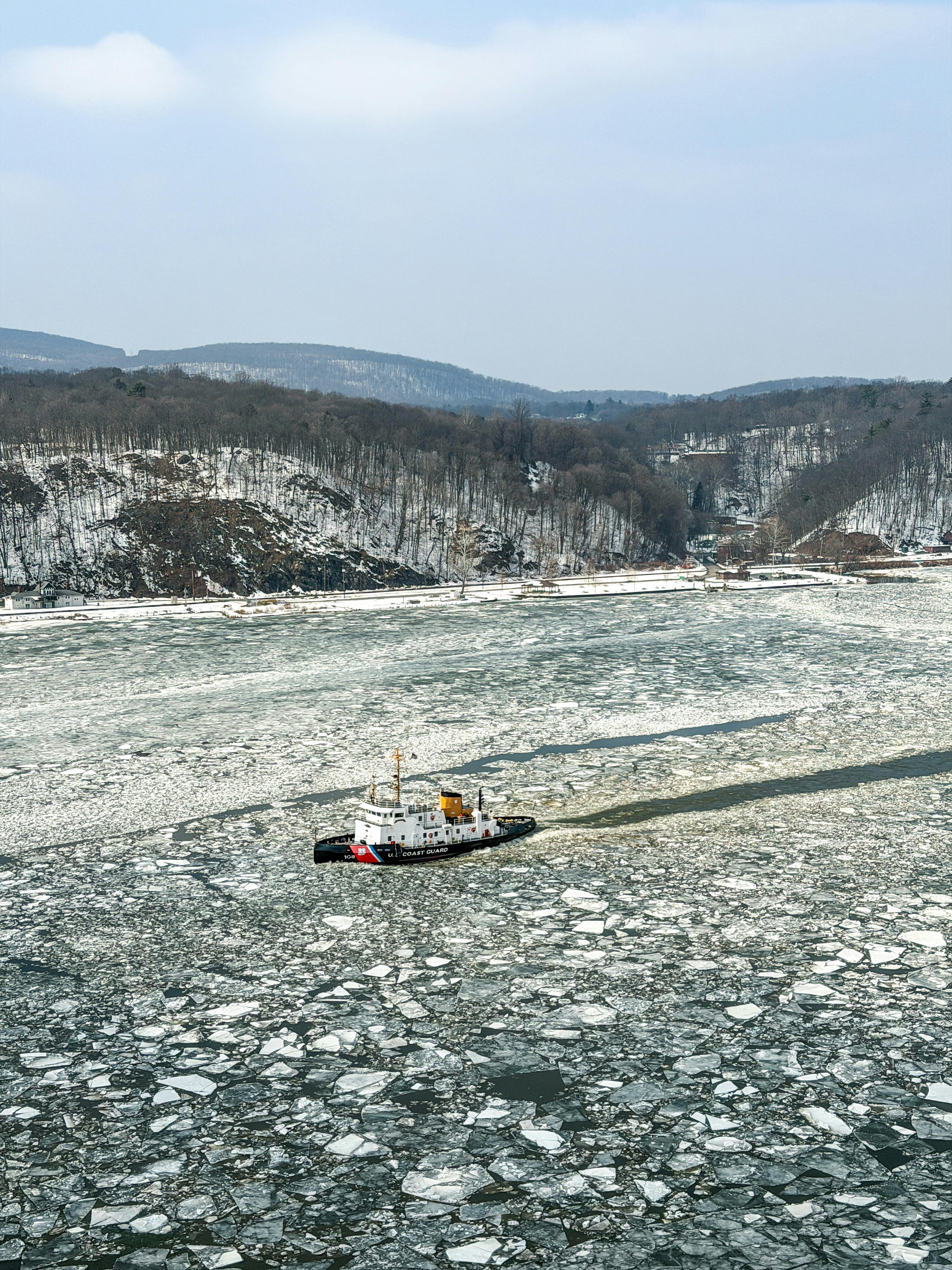
When you're sourcing vessels for Baltic operations, Arctic supply runs, or winter offshore campaigns in Norwegian or Russian waters, one specification rises above the rest: ice class. An ice-capable vessel isn't just operationally convenient — in many routes and seasons, it's a legal and contractual requirement.
The problem? Ice class notations are fragmented across classification societies, flag states, and spec sheets. A vessel described as "ICE-A" by DNV, "IA" under Finnish-Swedish rules, and "ICE (A)" by Bureau Veritas are all equivalent — but that's far from obvious when you're comparing vessel specs from three different owners in three different registries.
This guide decodes ice class notation completely, maps equivalences across all major classification societies, and explains what it means in practice for chartering and operations.
Why Ice Class Matters
Ice class certification determines whether a vessel can safely navigate in ice-covered waters — and to what degree. It covers:
Hull reinforcement — steel thickness, frame spacing, bow geometry
Propulsion protection — propeller and shaft design to withstand ice loads
Machinery resilience — systems rated to operate in extreme cold
Navigation capability — the level of ice concentration and thickness the vessel can safely transit
For charterers, ice class directly affects:
Which routes the vessel can legally operate on in winter season (Baltic, Barents, Northwest Passage)
Port state requirements (many Finnish and Swedish ports require minimum IC or IB in winter)
Charter party clauses — ice class is often a warranted characteristic
Insurance and P&I coverage — operating below the required ice class voids coverage
The Foundation: Finnish-Swedish Ice Class Rules (FSICR)
The Finnish-Swedish Ice Class Rules are the dominant reference for ice classification, particularly in the Baltic Sea. They define four operational classes used by virtually all Baltic flag state administrations and classification societies:
IC — Basic Ice Class
The entry-level reinforcement. Vessels classed IC are designed to navigate in light ice conditions with assistance from an icebreaker when necessary. Hull and machinery are strengthened but not rated for independent operation in heavy ice.
Typical operations: early and late winter Baltic transits, ports with moderate ice history, operations where icebreaker escort is standard.
IB — Intermediate Ice Class
Vessels classed IB can operate independently in moderate ice conditions, including ridged ice up to a certain thickness. No icebreaker escort required under standard winter conditions.
Typical operations: year-round Baltic operations, northern Baltic ports in winter, offshore wind installation in the southern North Sea.
IA — Reinforced Ice Class
Full independent operation in difficult ice conditions. Vessels classed IA are the industry standard for serious Baltic and North Sea winter operations. Hull, propulsion, and auxiliary systems are fully rated for heavy ice transit.
Typical operations: Finnish and Swedish port calls in deep winter, North Sea and Norwegian Sea offshore campaigns, Baltic cabotage year-round.
IA Super — Maximum Finnish-Swedish Class
The highest FSICR rating. IA Super vessels can operate independently in extremely difficult ice conditions, including thick ridged ice, without icebreaker escort. Very few OSVs carry this rating — it is primarily seen on purpose-built icebreaking supply vessels and ice-going PSVs.
Practical rule of thumb: If Baltic port entry requires a minimum ice class in your charter party, it will typically specify IA. For Arctic or Barents Sea operations, IA Super or DNV Polar class is often required. IC and IB suffice for southern Baltic and transitional operations.
Cross-Registry Equivalence: The Full Mapping
Each major classification society has its own notation for ice capability. Here is the complete cross-reference, aligned to the Finnish-Swedish FSICR tiers.
FSICR Class | DNV | BV | Lloyd's Register | ABS | GL | RINA | RS (Russian) | NK (Japan) |
|---|---|---|---|---|---|---|---|---|
IC | ICE-C | ICE (C) | Ice Class C | ICE C | E4 | ICE C | Ice1 / Ice2 | IC |
IB | ICE-B | ICE (B) | Ice Class B | ICE B | E3 | ICE B | Ice3 | IB |
IA | ICE-A | ICE (A) | Ice Class A | ICE A | E2 | ICE A | Ice4 | IA |
IA Super | ICE-A* | ICE (A*) | — | — | E1 | — | — | IA Super |
Icebreaker | ICEBREAKER | — | — | — | — | — | LL / L1–L4 | — |
Polar Code | POLAR | POLAR | POLAR | POLAR | POLAR | — | — | — |
Quick memory aid by society:
DNV → ICE prefix + letter (C / B / A / A*). The most common notation in Norwegian-flagged offshore tonnage.
BV → ICE prefix + letter in parentheses. Common in French and Mediterranean-flagged vessels.
Lloyd's Register → "Ice Class" written out + letter. Seen on UK and Commonwealth-flagged tonnage.
ABS → ICE + letter, no parentheses. Common on US-flagged and Marshalls Islands-registered vessels.
GL → E-scale, reverse order (E4 = lightest, E1 = heaviest). Rare in offshore — mainly legacy German tonnage.
RS → Russian Maritime Register uses Ice1–Ice4 + icebreaker classes (LL, L1–L4). Dominant for vessels operating in Russian Arctic.
The Polar Code: A Separate Framework
The IMO Polar Code, which entered into force in 2017, introduces a separate classification specifically for vessels operating in Arctic and Antarctic waters. Polar Code vessels are assigned a Polar Ship Certificate and classed under one of three categories:
Category A — vessels designed for operation in at least medium first-year ice, which may include old ice inclusions
Category B — not specifically designed for polar waters, but capable of operating in thin first-year ice
Category C — vessels designed to operate in open water or in ice conditions less severe than Categories A and B
The Polar Code does not replace FSICR — a vessel can hold both a Finnish-Swedish ice class and a Polar Ship Certificate. For operations in the Barents Sea, Norwegian Arctic, or Antarctic supply runs, the Polar Code is increasingly a contractual requirement.
Decoding DNV Ice Notation in Depth
DNV is the dominant classification society for Norwegian offshore tonnage — and Norway is the dominant flag state for offshore support vessels operating in Arctic and sub-Arctic conditions. Understanding DNV's ice notation is therefore essential.
ICE-C — Entry Level
Hull and machinery reinforced for light ice conditions. The vessel can operate independently in thin first-year ice and may require icebreaker assistance in heavier conditions. Appropriate for seasonal Baltic operations and occasional winter North Sea campaigns.
ICE-B — Intermediate
Independent operation in moderate ice. The vessel can handle ridged ice and brash ice at normal operating speeds. No icebreaker required under typical Baltic winter conditions.
ICE-A — Full Ice Class
The standard for serious winter offshore operations. The vessel can operate independently in difficult ice — heavy first-year ice, ridged ice — and maintain operational capability in extreme cold. This is the de facto minimum for year-round Norwegian Sea operations and for vessels regularly calling at Finnish or Swedish ports in winter.
ICE-A* — Maximum DNV Class
Above IA in the FSICR scale. Very limited fleet — primarily purpose-built icebreaking OSVs. For Barents Sea and Svalbard operations in deep winter.
Vessel Spotlight: ASD Tug 3413 ICE-STD (Damen)
The ASD Tug 3413 from Damen Shipyards is a compact azimuth stern drive tug built with standard ice reinforcement — denoted ICE-STD in the vessel's specifications. This notation represents an intermediate level of ice strengthening, broadly equivalent to IB / ICE-B in the FSICR / DNV scale.
Key specs:
Type: ASD Tug (Azimuth Stern Drive)
Bollard Pull: ~40–50 tonnes
Ice notation: ICE-STD (standard ice reinforcement)
Propulsion: Twin Azimuth thrusters, ice-rated
Hull: Ice-strengthened longitudinal framing, reinforced bow
Why ICE-STD matters operationally
The ASD Tug 3413 ICE-STD is designed for port and terminal operations in seasonally ice-affected waters: Finnish and Swedish ports, Baltic energy terminals, and nearshore towing operations in light to moderate ice. The ice reinforcement is not full icebreaker specification — the vessel is not designed for independent Arctic transit — but it provides reliable operational capability in the ice conditions that most Baltic winter terminals actually present.
For charter parties covering Baltic terminal towing or offshore mooring support in winter season, ICE-STD (or equivalent IB/IA) is often the minimum specified. A standard ASD tug without ice notation cannot be substituted, regardless of bollard pull.
What Ice Class Means in Practice for Chartering
When evaluating vessels for ice-affected operations, ice class directly determines:
Port state compliance — Finnish and Swedish port authorities publish annual ice traffic restriction lists specifying minimum ice class per route. Non-compliant vessels are barred from entering certain ports without icebreaker escort.
Charter party warranties — Ice class is frequently a warranted vessel characteristic. Substituting a non-ice vessel, even temporarily, constitutes a warranty breach.
P&I coverage — P&I clubs scrutinise ice class compliance. Operating below the required rating in ice conditions may void coverage entirely.
Icebreaker assistance costs — Non-ice-class vessels operating in Finnish or Swedish winter waters require mandatory icebreaker escort — at significant additional cost, typically borne by the owner or passed through to the charterer.
Operational limitations — Ice-unrated vessels face speed restrictions, routing constraints, and potential hull damage that ice-rated vessels are designed to withstand.
Understanding cross-registry equivalence allows charterers and operators to compare vessels across Norwegian, Finnish, Russian, and Marshall Islands registries on a true like-for-like basis — which is the only way to build a fair vessel shortlist for Baltic or Arctic work.
How to Find Ice-Capable Vessels
In a vessel database or search platform, ice class can appear in multiple places:
Class notation field — structured data from the classification society (e.g.
DNV ICE-A,BV ICE (A))Vessel description / specs text — free-text fields where owners write
"Ice Class 1A","ICE TUG","Polar Code compliant"PDF specs sheets — parsed from uploaded vessel specifications, where ice notation appears in a technical parameters table
The challenge is that no single standard exists for how ice class is written in vessel specs. You may encounter ICE-A, IA, Ice Class A, 1A, FSICR IA, Ice Class 1A Super, or simply ice-strengthened — all referring to the same certification level. A robust vessel search platform needs to recognise all these variants and surface them consistently.
Seavium references 30,000+ offshore and specialised vessels across 200+ companies in 25+ countries — with ice class, registry notation, and operational parameters fully searchable. Explore the platform at go.seavium.com.
Sources
Finnish Transport and Communications Agency (Traficom) — Finnish-Swedish Ice Class Rules
IMO MEPC.264(68) — International Code for Ships Operating in Polar Waters (Polar Code)
Det Norske Veritas — DNV Rules for Classification: Ships, Part 5 Chapter 1 — Ice Strengthening
Bureau Veritas — BV Rules for the Classification of Steel Ships, Part E Chapter 8 — Ice Notation
IACS — Unified Requirements for Polar Class
Seavium references 30,000+ offshore and specialised vessels across 200+ companies in 25+ countries — with ice class, class notation, and operational parameters fully searchable. Explore the platform at go.seavium.com.